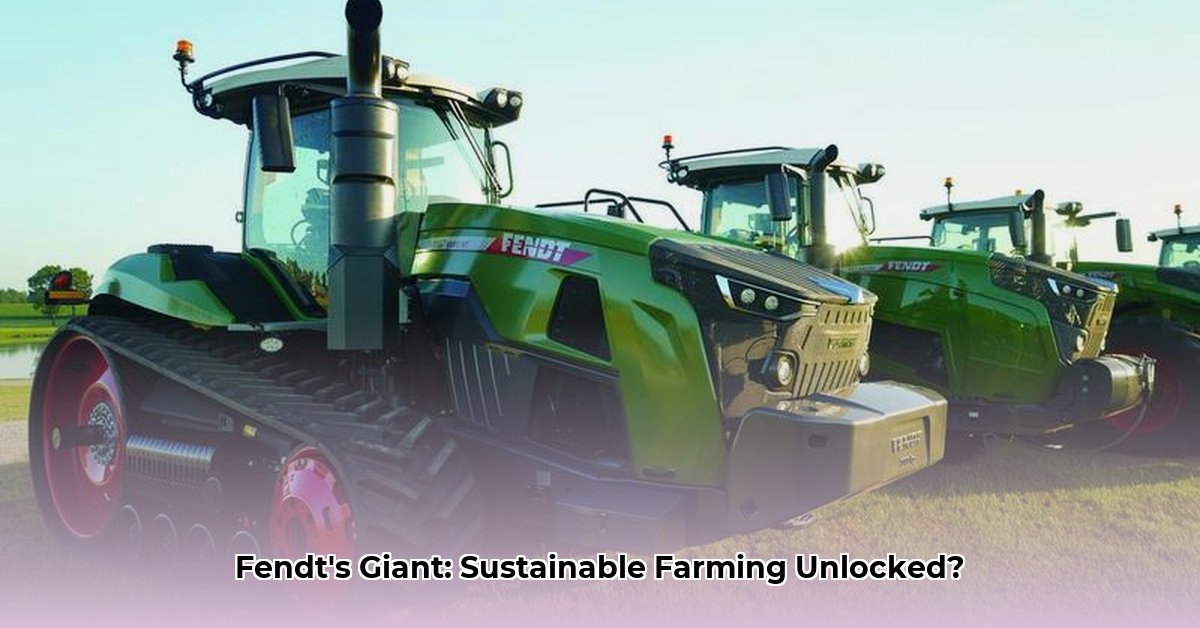
Largest Fendt Tractor: A Deep Dive into the Fendt 1100 Vario MT
Sustainable agriculture demands optimized efficiency and minimized environmental impact. The Fendt 1100 Vario MT, the largest Fendt tractor, promises to deliver both, but is it a worthwhile investment for your farm? This in-depth review examines its capabilities, cost-effectiveness, and environmental footprint. For a smaller-scale option, check out smaller tractors.
Power and Efficiency: A Giant That Sips Fuel
The Fendt 1100 Vario MT boasts a significant power output – ranging from 511 kW to 495 kW (673 - 663 hp) depending on the model. However, its true innovation lies in Fendt iD, a system that allows the engine to operate at a remarkably low 1000-1700 RPM. This low-speed concept maximizes torque even at lower engine speeds, resulting in impressive power while significantly reducing fuel consumption compared to traditional tractors. The continuously variable transmission (CVT) further enhances efficiency by automatically adjusting engine speed to match workload. This combination of power and efficiency translates to substantial cost savings for farmers, a critical element of sustainable farming practices. But how much fuel does it actually save? Detailed, independent testing is needed for concrete figures.
Gentle Giant: Protecting Your Soil's Health
Large machinery often leads to soil compaction, harming long-term soil health. The Fendt 1100 Vario MT, however, employs a tracked system instead of wheels. This distributes weight over a larger area, minimizing soil compaction. Combined with its long wheelbase and advanced suspension, this tractor moves with surprising gentleness across fields. This reduced ground pressure is crucial for sustainable agriculture, promoting healthy soil structure and long-term productivity. But how does its soil impact compare to other large tractors? Independent comparative studies would provide invaluable data.
The Price Tag: Is It Worth the Investment?
The initial investment in a Fendt 1100 Vario MT is substantial. Determining its value necessitates a thorough cost-benefit analysis. This analysis requires careful consideration of factors beyond the initial purchase price, including:
- Reduced fuel consumption: Quantifiable savings need to be assessed against the initial investment cost.
- Increased efficiency: How much higher yield is achieved given the increased power and reduced downtime?
- Operating costs (maintenance, repairs): Long-term operational costs need accurate projection.
- Resale value: What is the expected depreciation over the machine's lifespan?
- Financing options: Are financing options available to make the initial investment more manageable?
A discounted cash flow (DCF) analysis is essential to accurately predict the long-term profitability of this investment. The lack of publicly available long-term operational data currently makes this comprehensive analysis challenging.
Beyond Fuel Savings: The Environmental Impact
Sustainable agriculture necessitates a holistic view of environmental impact, extending beyond fuel efficiency. The Fendt 1100 Vario MT's manufacturing process, material sourcing, and eventual disposal all contribute to its overall environmental footprint. A comprehensive lifecycle assessment (LCA) is crucial to fully understand its environmental impact. This LCA should include the sourcing of materials, energy consumption during manufacturing, operational emissions, and end-of-life disposal. Without a comprehensive LCA, a truly informed assessment of the tractor's sustainability remains incomplete.
Putting Sustainability into Practice: Finding the Right Fit
The Fendt 1100 Vario MT's compatibility with various sustainable farming practices, such as no-till farming and precision agriculture, requires careful consideration. Does it seamlessly integrate with existing precision agriculture technologies? What are the potential benefits and challenges of its integration into various farming systems? Further research and independent trials are needed to determine the optimal operational strategies to fully realize the potential of this technology for the various farming contexts.
How to Calculate the True Lifecycle Cost of a Fendt 1100 Vario MT Tractor
Determining the true lifecycle cost requires a comprehensive approach. The Fendt 1100 Vario MT's long-term cost-effectiveness is directly influenced by several factors:
- Initial purchase price: This is the immediate, upfront cost.
- Fuel consumption: Lower RPM through Fendt iD promises savings, but independent verification is essential.
- Maintenance and repairs: Predicting the costs and frequency of necessary repairs needs further analysis.
- Resale value: The tractor's value at the end of its lifespan significantly impacts the total cost.
- Labor costs: The time and cost of operation and maintenance should be factored.
A detailed cost analysis incorporating these elements, alongside a DCF analysis, would accurately assess its long-term financial viability. Openly available, verified data on long-term performance is critical for farmers making informed decisions.
Key Takeaways:
- The Fendt 1100 Vario MT offers significant power and potential fuel efficiency through Fendt iD technology and CVT.
- Its tracked system minimizes soil compaction, promoting soil health.
- Versatility in implement integration enhances adaptability to various farming needs.
- However, a comprehensive cost-benefit analysis using long-term operational data is crucial for informed investment decisions. This currently requires further investigation and data collection.